This article is a translation of "The Five Types of Virality" by Josh Elman, Partner at Greylock.
Every entrepreneur imagines their product growing through word of mouth. But understanding virality correctly isn't easy. Investors will ask you to "make the app go viral" or "add more virality to your product." (The same applies to "growth hacking.")
Sometimes it feels like everyone thinks virality is magic. Thankfully, most people understand it more concretely than that. But to truly understand how virality works, you first need to recognize that not all virality is the same. Many successful companies have implemented different strategies to drive viral growth, and I want to try to categorize those strategies clearly.
If you're trying to grow a product, you should think as specifically as possible about how people will hear about it — that's what enables you to create features that make people want to try it. Obviously, the most important thing is to create a product people love. Once they love it, they'll want to talk about it. But how do you give them topics that are easy to talk about and feel rewarding? How do you prompt them to share their positive experience at the right moment? You need to genuinely understand users' core motivations and figure out how to help them spread the word.
Do you need to build incentive programs into the product or marketing plan? If users naturally create something visible and shareable within the product (like photos), how do you make sharing feel natural so others develop interest in the product? And how do you ensure that interested people can convert to new users as seamlessly as possible?
The most fundamental element of all types of virality is the "hook." The goal of every viral mechanism is to make people understand what the product can do and get excited enough to try it. That's the essential component in any form of virality. So what words, hooks, and reasons make people actually want to try the product?
Here are five patterns I've found. If you know of others, I'd love to hear them.
Word-of-Mouth Virality
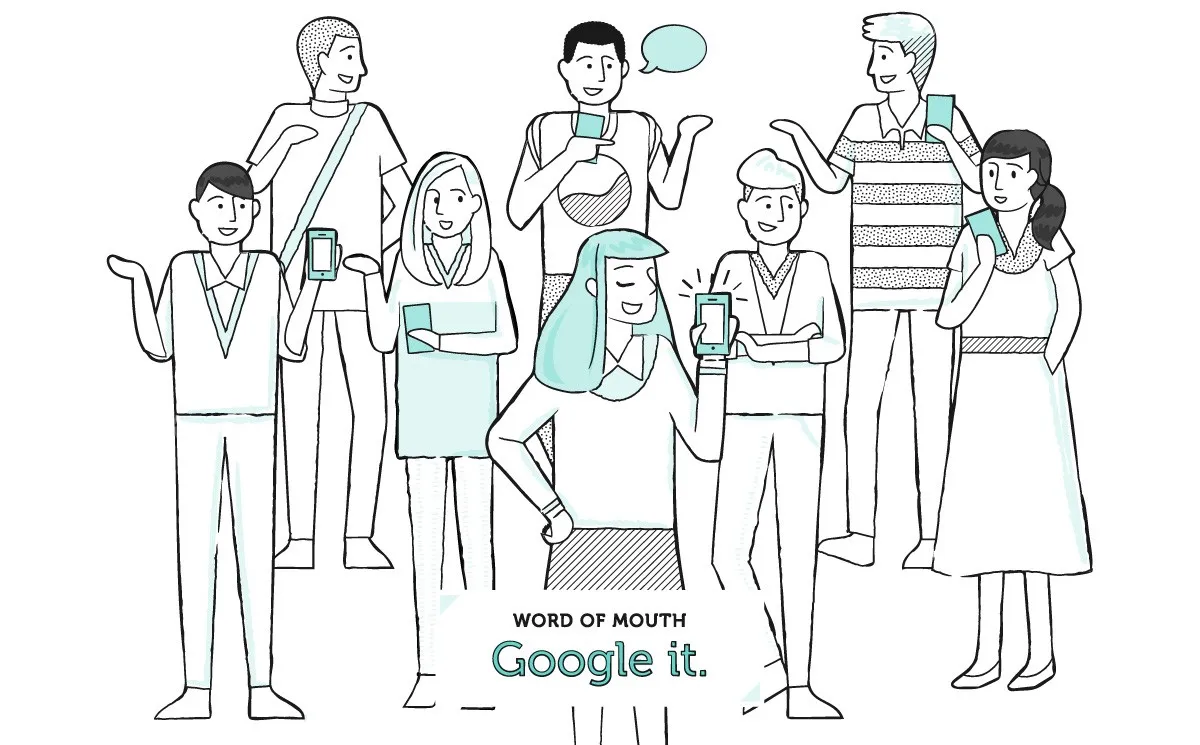
This is the simplest type: the product is so good that users want to tell their friends. When Google launched, if you were using AltaVista, Infoseek, or another search engine, a friend might say "try Google, it's amazing." Next time, you'd use Google — and quickly want to recommend it to someone else.
Years ago, when I first touched iPhone apps, geeks like me were spreading the word about Evernote, which could sync notes between PC and phone. Someone would show off how simple and useful it was to take notes on their phone. That kind of scene played out many times.
Another key to word-of-mouth is making the product easy to find later. A memorable name definitely helps (Google is easier than Googol). Removing vowels, doubling letters, or not securing the right domain or app name all make it harder to recall. Here's a test: type your company name into the App Store search bar and look at the autocomplete. If your app is called "InstaGreatCoolThing," the results will show Instagram and similar apps unless your app is already as big as Instagram.
Another key is whether the product is easy to explain. The words you use to describe it — on your homepage, in press releases, and within the product — become the baseline that users use when explaining it to others. This is critical for user-to-user transmission. Funny features like Google's "I'm Feeling Lucky" or Facebook's "Poke" also make the product stick in people's minds. If there's no easy way to explain the product, assume users can't explain it either.
Incentivized Virality
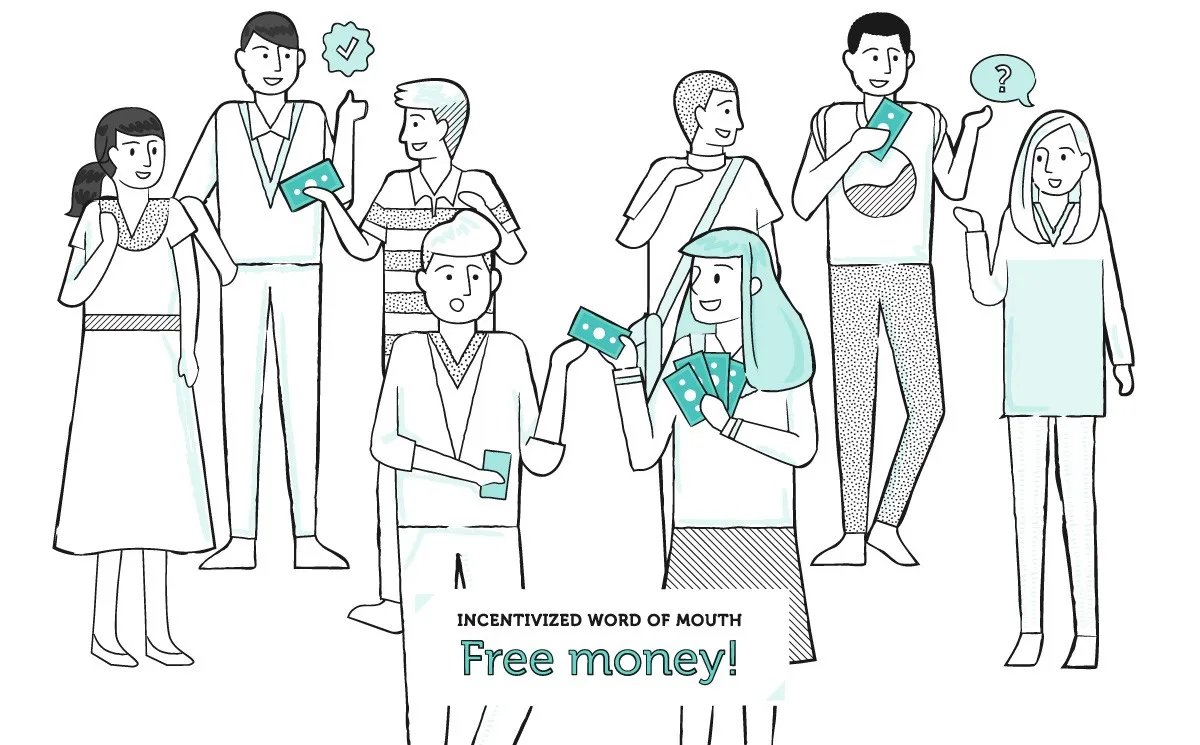
This is similar to word-of-mouth, but adds a small incentive to encourage sharing. PayPal famously gave $10 when a friend signed up. Dropbox and Uber are both great examples where incentives worked well: refer a friend and both of you get free storage or a discount on the first ride.
When a new account is created, the incentive works as a coupon for the new user and a reward for the referrer. It's not as clean as pure word-of-mouth, but discounting the service can work effectively.
Demonstration Virality
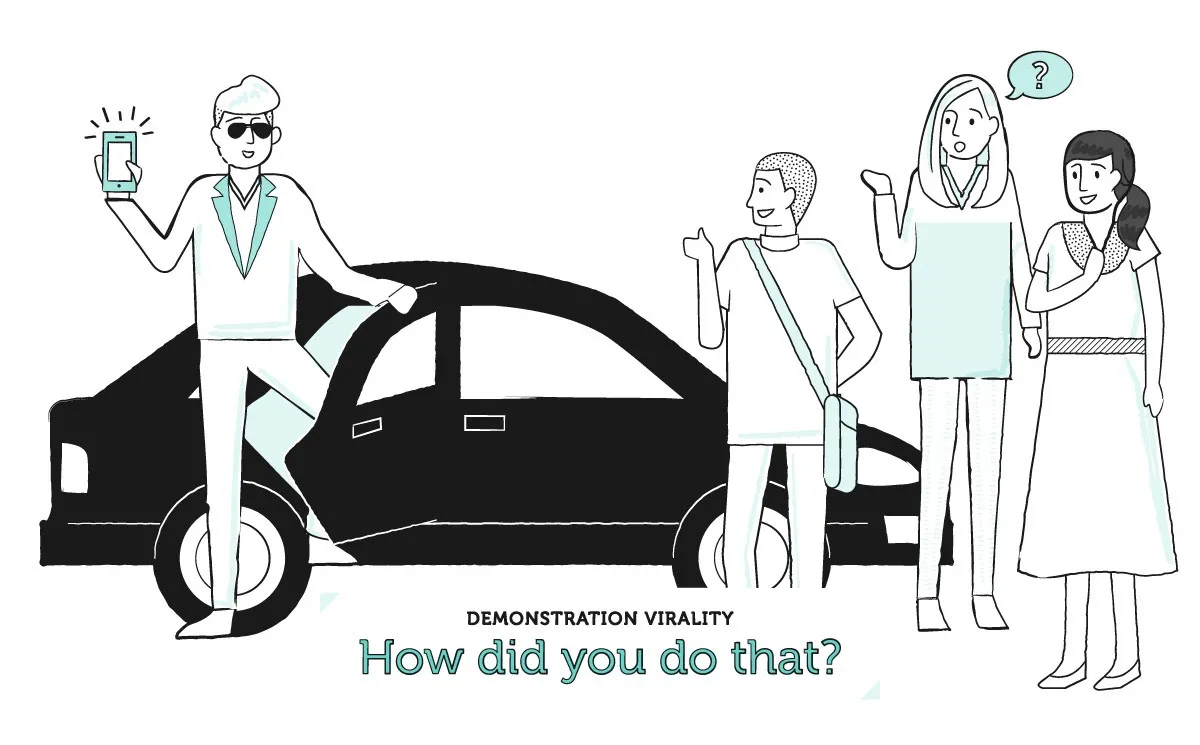
Demonstration virality happens when a product is simple, easy to use, and showy by nature. Instagram is the clearest example. In 2010, moving photos from your phone to somewhere else was difficult. Instagram added tools for easily sharing photos to Twitter, Facebook, Flickr, and more. Instagram's filters naturally drew attention from people in your network. "How did you do that?" was the natural reaction, and it was easy to provoke.
Prisma became a massive hit this summer. With Prisma you can create remarkable stained-glass-style artwork and share it anywhere. Naturally people wanted to know how to do it, and would ask or spot the small Prisma logo embedded in the image and download it themselves.
Musical.ly spread the same way: users and influencers created incredibly cool music videos, shared them on Instagram, Facebook, YouTube, and Musical.ly, spreading to people who wanted to make their own music.
Pinterest's pinboards of interesting GIFs, wedding ideas, or recipes — when shared — act as organic internal ads showcasing the beauty of the platform.
Uber benefited from demonstration virality early on. When you arrived at a meeting in a black car, people asked: "Did you get a limo?" Or at a party, when you pressed a button and a car appeared while your friends were hailing cabs or calling one in. Using Uber, you became a walking advertisement describing how great it was.
Contagious Virality
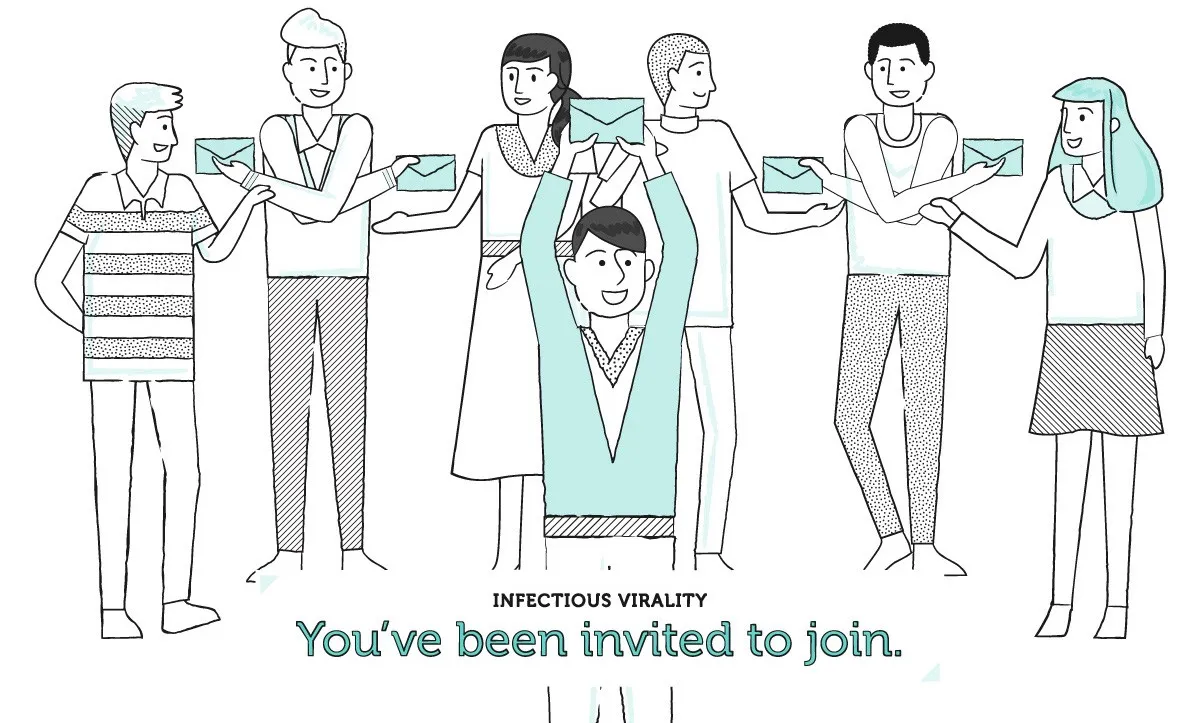
Contagious virality happens in products designed so that using them with someone else creates value for both parties. One user transmits the "virus" to another. The product attracts both sides. Snapchat, for example, is a reliable and safe way to send and erase images between people — a product with the power to spread contagiously and drive downloads. Twitter spreads the same way. If you follow me, I gain more followers and you can see what I'm doing and tweeting in real time — mutual benefit. Nextdoor is a fascinating example: even if people don't know their neighbors, they can send postcards and expand the neighborhood community, making it more productive for everyone. LinkedIn and Facebook are the classic examples: people invited colleagues and friends, and it spread.
Invitations are key to contagious growth. But the wrong invitation — or an overly spammy one — often has the opposite effect. When someone invites you to a service simply because you're in their address book, there's no personal connection and no emotional bond. And if you sign up but that person barely uses the product, the likelihood of you becoming active drops dramatically.
This is what most people think of as traditional virality — why we've seen the spread of social networks and communication tools. Who doesn't love the feeling of being invited by a friend? But contagious virality doesn't apply to every product, nor should it be forced on every product. An invitation mechanism will never work unless the product itself is genuinely social. That's why we're careful about this method and make sure it truly fits the product.
Outbreak Virality
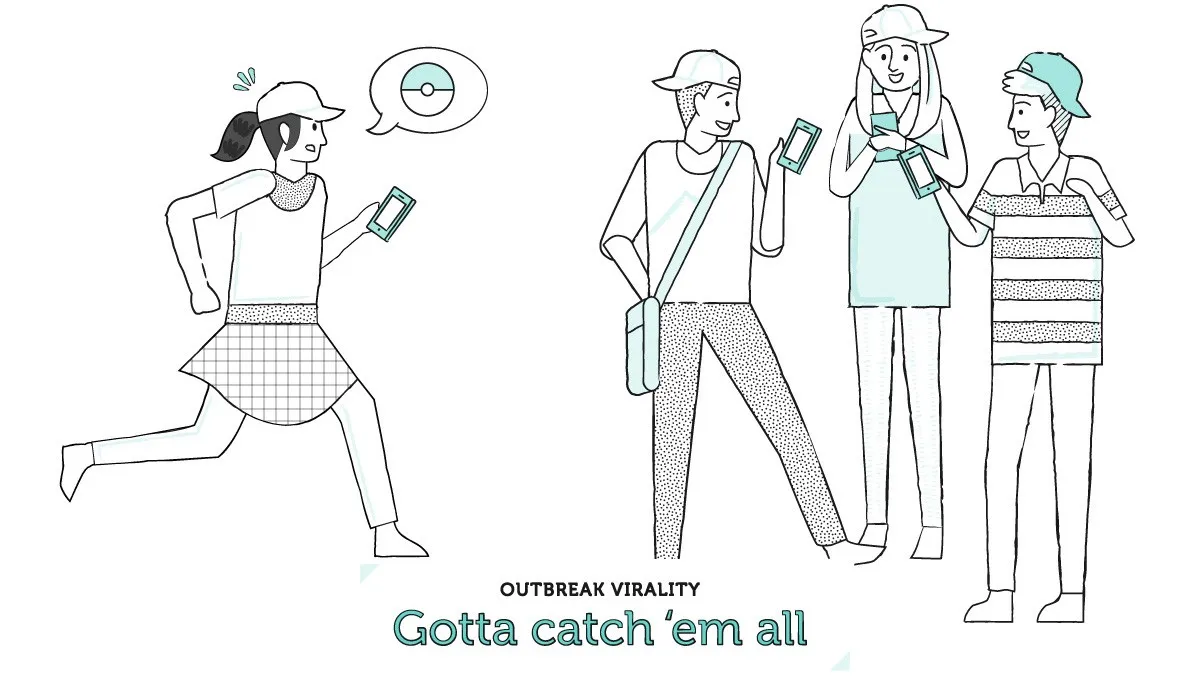
Finally, some products spread because sharing is fun, or because riding a wave of popularity makes you look cool. YouTube exploded in popularity for the simple reason that videos were funny, addictive, and fun to share with friends.
Similarly, Pokemon Go broke through this summer because everyone was playing it, talking about it with friends, and being part of it was fun. There were other factors, of course — leveraging the well-established Pokemon brand, for instance — but the high-level cycle of fun, popularity, and sharing was a significant driver as well.
All together
When you understand these as distinct tools that each work differently, you can naturally incorporate virality into your product.
I often meet founders who say:
"I'm thinking of adding an invitation flow to the product."
They almost always fail. If the positioning is off or the implementation is clumsy, the invitation flow generates a flood of counterproductive invitations that don't convert to new users. People who don't love the product show up, and it's just a parade of one-timers. Don't attempt contagious virality unless there are genuine mutual benefits for both the inviter and the invitee, and it truly fits the product.
When you succeed in creating a moment of contagion, or planting the product in someone's mind, you need to immediately follow up with a "new user flow." People arriving at your website or app store are ready to try the product. They're interested and excited. This is your best opportunity: start the onboarding process the moment it has a chance to become a habit — and give new users the chance to spread the product to others.
It's possible to trick the masses into looking at and trying your product quickly. But if you attract users for the wrong reasons, they won't stick with the product — or if they do, they won't stay long enough or viral enough to matter. Whenever you're thinking about hacking virality, always check: "Am I reaching the right people?" "Are they interested in the product's core value?" "Am I guiding them toward the right action?"
I still remember the first time I was invited to Snapchat. A friend sent me a message to join. Together we could send and erase fun emoji. When I joined, what he did was send me an emoji — and we genuinely enjoyed that communication. The viral hook worked on me from the very first launch. After that we communicated often, and many friends joined Snapchat. If Snapchat had given free beer to everyone who registered, they might have gained users faster — but those people would have left when the beer ran out.
At the end of the day, remember the one metric that actually matters: how many people are actually using your product. Not downloads, not clicks, not people who tried it for one day. People who are using it right now. The only goal of viral techniques is to acquire as many users as possible who keep coming back.