This post covers Stailer's current strategy, how we're building our organization around it, and the kind of people we want to work with.
It's based on Zero Topic episode #68: Stailer's Business and Organizational Strategy, with updates.
Stailer's entry point
Stailer launched in June 2020 and is currently deployed at Ito-Yokado (part of Seven & i Holdings).
Ito-Yokado has run a net supermarket service called IY Net since opening their Kasai store in 2001 — nearly 20 years of history. It wasn't launched as a standalone business; it was positioned as "one service offered by the store." The stores had been stretching to meet user demand under that constraint for years.
IY Net is the top-share net supermarket in Japan, but demand has long outpaced supply capacity. Solving the supply and software bottlenecks and achieving UX optimized for modern use cases — that was the problem Stailer was built to solve.
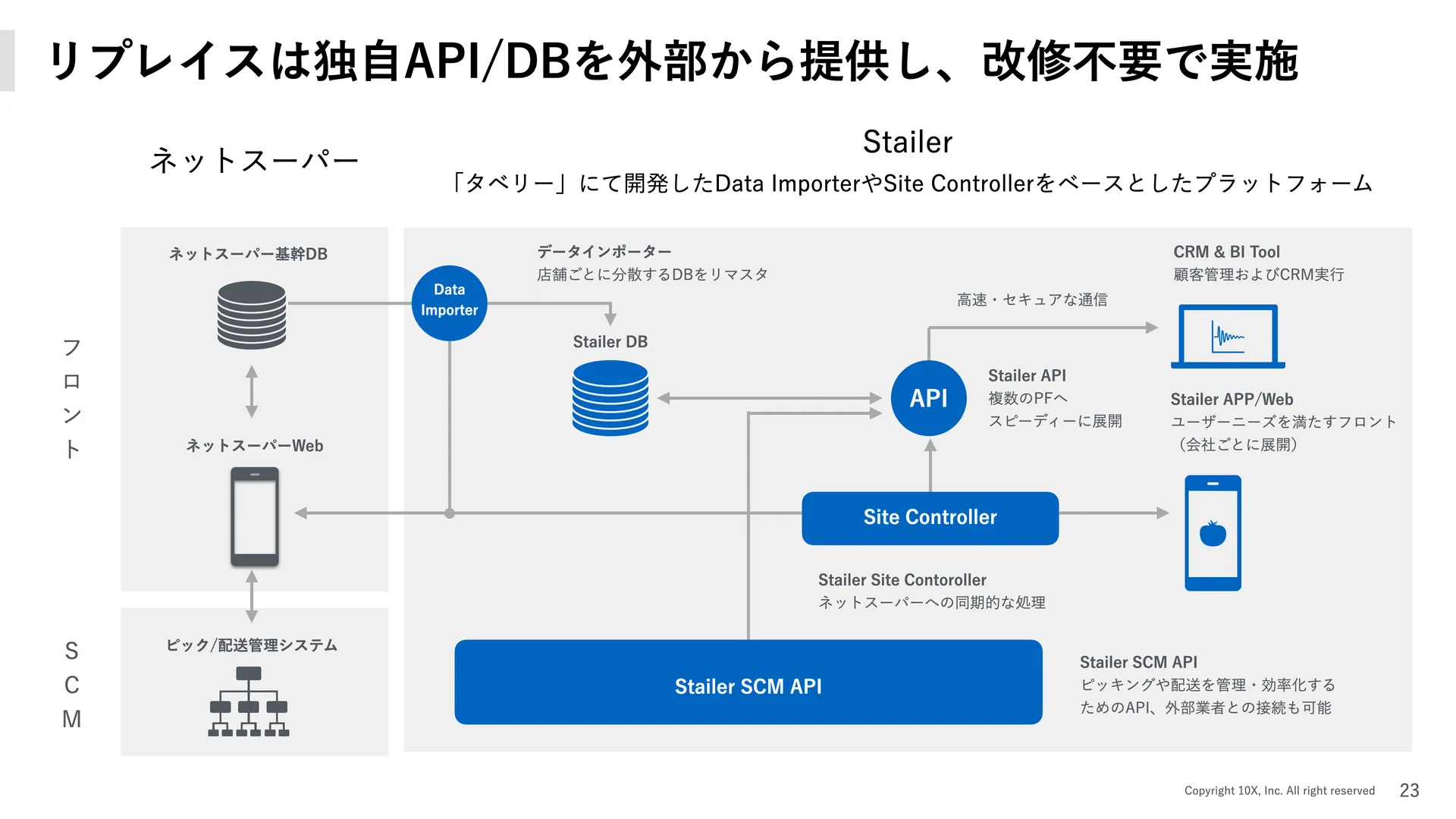
The entry point was a user-friendly Ito-Yokado net supermarket app. Crucially, it required no changes to Ito-Yokado's existing website or management systems. 10X built external product master management systems and APIs to control cart additions and checkout — delivering a highly usable, rapidly improvable net supermarket app under Ito-Yokado's brand.
Since launching, the app has begun penetrating core users and new younger users. Within two months of release, we were handling thousands of orders per day with strong retention (as of August 2020).
For a startup to build this scale from scratch — constructing its own supply chain — would take years. For a large retailer to build a new digital channel would also take years. Stailer shortcuts both paths dramatically, in service of a goal shared by both 10X and Ito-Yokado: achieving 10x improvement in customer experience and business growth.
Also the best product for supply chain operations
But Stailer's goal isn't one company's success. It's making the retail and distribution user experience 10x better across the industry.
Think about the grocery shopping experience today. 99% of users drive to a store, spend 30+ minutes selecting products, load them into a cart, stand in a checkout queue, pack their bags, and commute home — a heavy task they repeat several times a week.
10X is betting that this essential, high-frequency, painful routine will shift online. Stailer exists to remove the bottlenecks that prevent store-based retailers with tens of thousands of SKUs across multiple temperature categories from launching a net supermarket business.
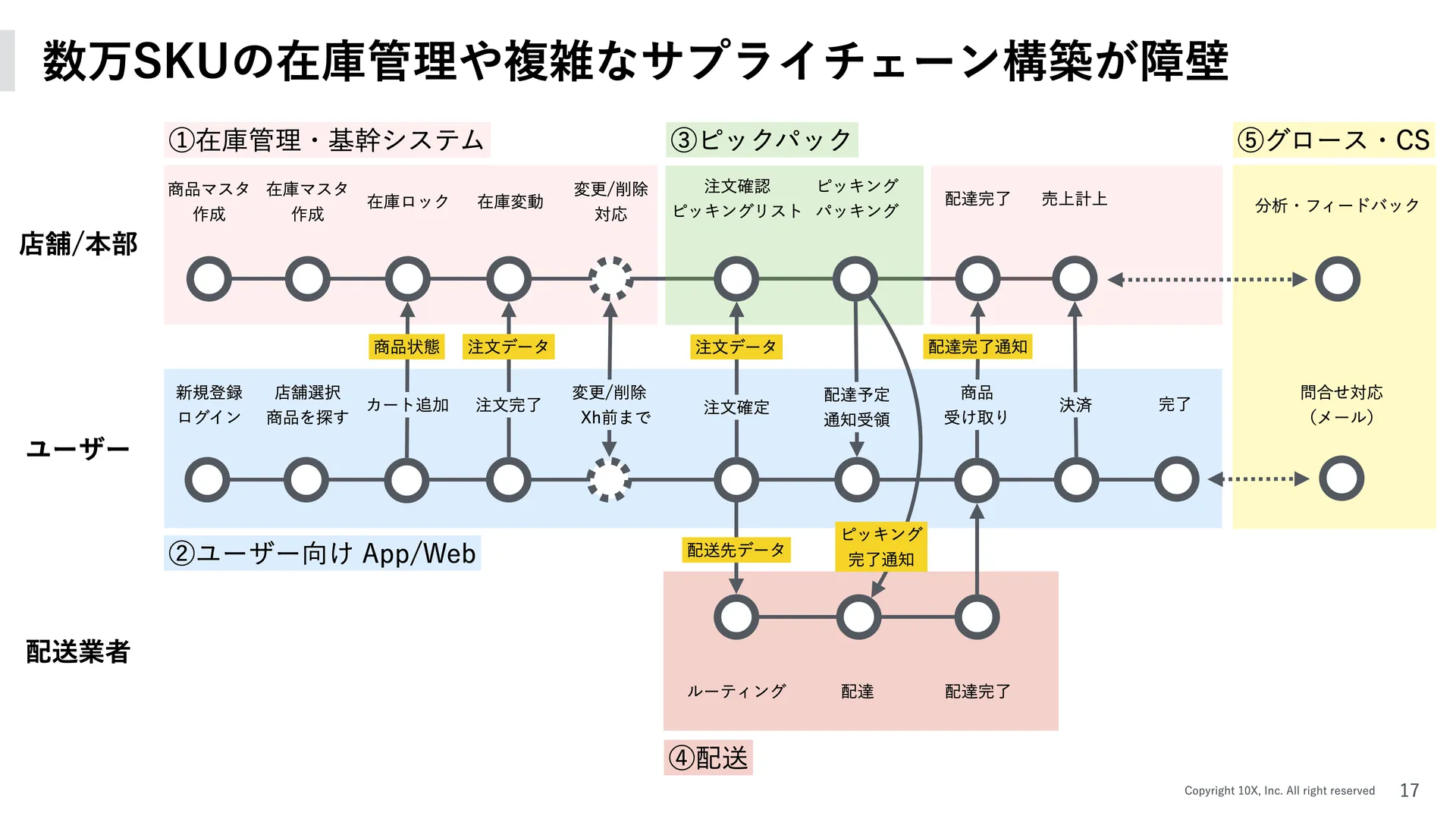
This is why Stailer's product scope extends beyond the consumer UX to the digitization and efficiency of supply chain management (SCM). One dominant product in this space is Keyence's handheld scanner systems. We're confident Stailer can surpass it — though this side of what we build will rarely be visible to the general public.
(We ran our own supply chain experiment called Tabekuru for about two years, which gave us deep experience with these problems. I wrote about this in my previous post "From Tabery to Stailer.")
The relationship between BizDev and product
10X is a small company of fewer than 20 people, but since Stailer's launch we've received over 60 inquiries from retailers across Japan — and interest has not slowed.
For each company that reaches out, we research their history from founding, analyze their IR materials, conduct N=1 user interviews with their existing customers, and develop a clear picture of the ideal long-term future before opening any substantive conversation. We're not selling a product — we're building the trust needed to run a business together for the long haul. That's the Stailer BizDev philosophy.
From this, we're already running full-stack projects — UX and SCM together — where retailers launch EC from zero. In most cases, it's their first ever EC venture. For 10X, every retailer is a discovery: business model, SKU rotation, scale, store size, staff characteristics, backyard layout — the variables that matter for building SCM products are enormous and every case teaches us something new.
We visit partner sites in person, observe, build, tear down, build again — constructing SCM product the same way you'd build a consumer product.
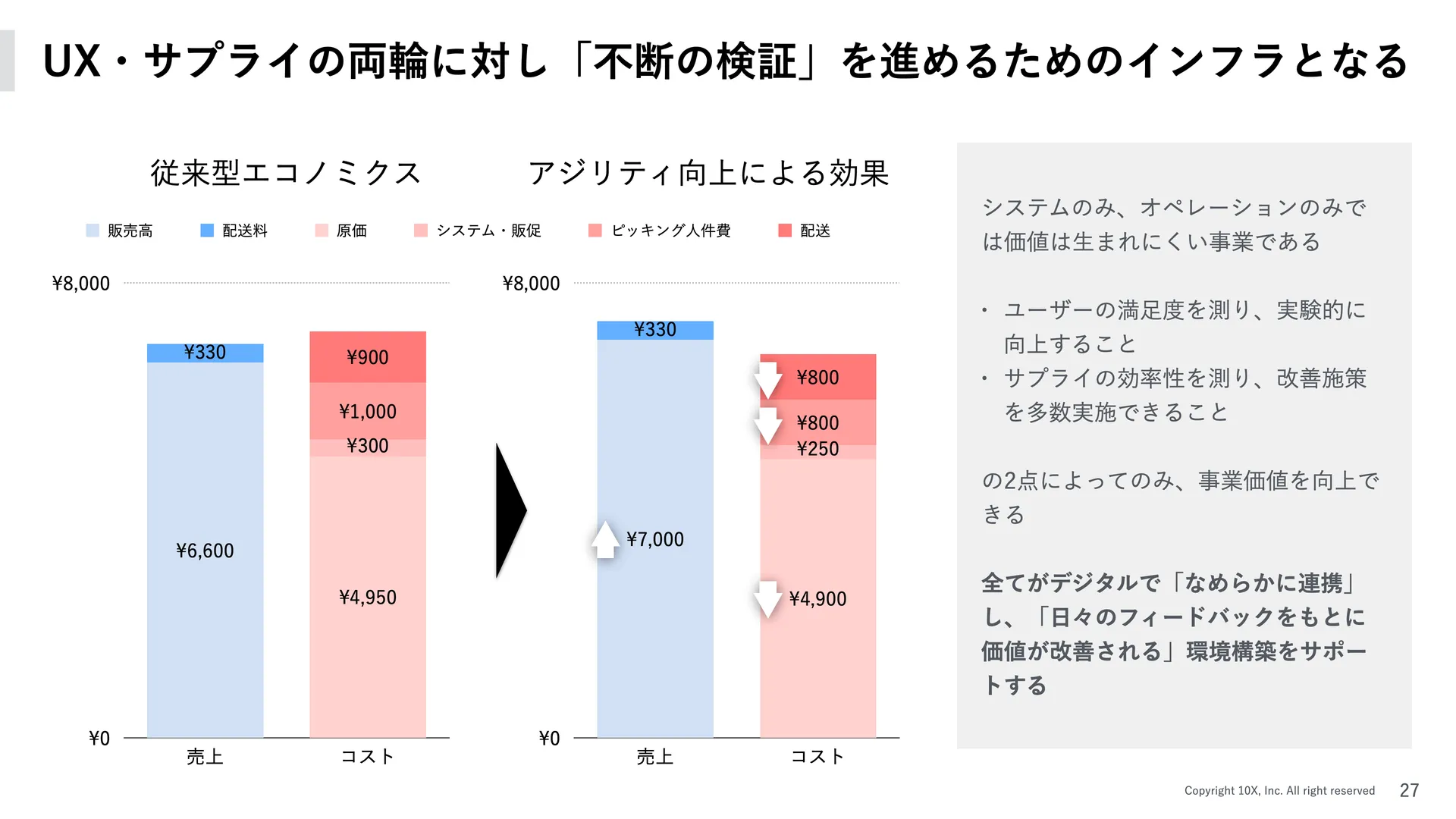
Why does SCM matter so much? Net supermarkets are consumer services. Running a consumer service means continuously validating against shifting user uncertainty — establishing facts. But a product with demanding supply operations tends to lose agility, dragged down by the cost of changing supply. 10X is all-in on solving this with SCM product.
How we're building the organization
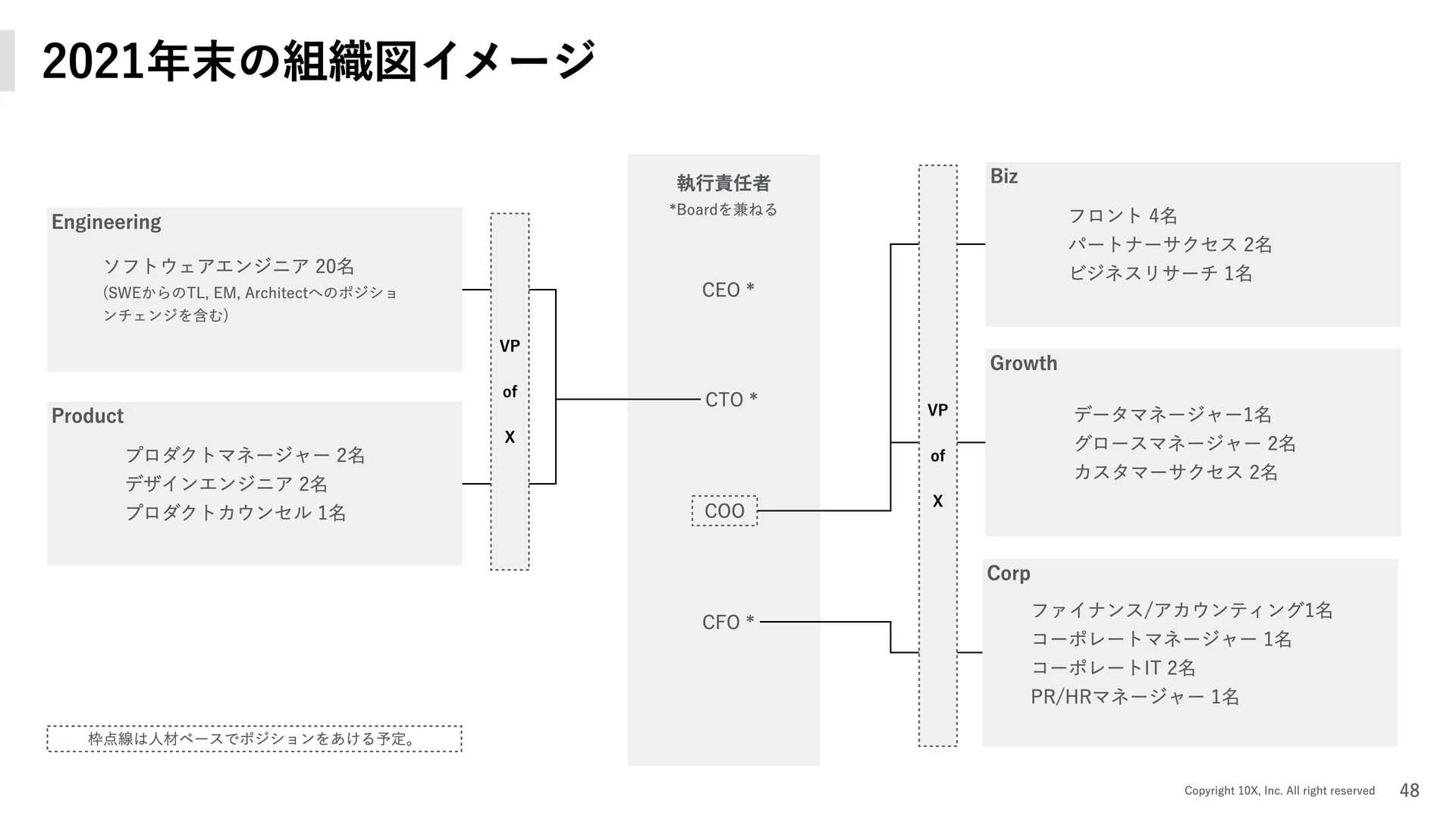
Our principle is that organization follows business. To maximize the business, we've structured four core functions:
- Engineering: Understand the full landscape of store operations systems (POS, core systems) and solve the bottlenecks preventing EC launch
- Product: Build the best product for each of the multiple stakeholders — end users, store staff, headquarters, and delivery vendors
- BizDev: Understand the business direction of clients at different scales and stages; build trust with their executives and founders
- Growth: Develop deep understanding of users and business; share knowledge; establish facts; use all of this to grow EC into partners' core business
Beyond these, we have a corporate team that creates leverage for overall productivity. We're targeting an org of 40+ people over the next year (currently 16).
As described above, Stailer accompanies the entire value chain: from sketching a partner's business strategy, to EC launch, to growth, to understanding customers and closing the feedback loop.
The hardest challenge in a long value chain? Cross-functional roles — abstracting requirements from multiple partners into the highest-leverage product changes (PM); building UI that simultaneously solves system and user issues (design engineering); translating partner issues into growth initiatives (partner success). These roles that span teams are where the real difficulty lives.
How we bridge across teams
Myself and co-founder Ishikawa currently handle many of the cross-team balls. But the plan is to scale this capability through clear role definitions and team capability development.
Three things we're particularly focused on for advancing cross-team work:
- A clear picture of the ideal end state
- Implementation at the right level of abstraction
- Not fearing breaking changes
In design engineering, for instance, Ishikawa plays a central role — but smaller changes are built autonomously by individual software engineers using our internal design system. This is distinctly 10X: a source of speed, but also something that's only possible because everyone maintains high sensitivity to cross-team information.
This connects to something a design engineer I deeply respect told me: net supermarkets are "pain killers used at nearly daily frequency." Products like this demand agility to keep solving evolving problems more than they demand visual creativity. The ability to handle complex issues without simplifying them away depends critically on those cross-team roles.
10X is product-centric. Engineering and product will continue to make up more than half of the company. As we scale, the importance of cross-team roles only grows — and new positions are being created to reflect this.
Maximizing value expression: the grade system
What governs organizational performance isn't just structure — it's the values that define how people act. We designed a grade system to maximize how fully 10X's three values are expressed.
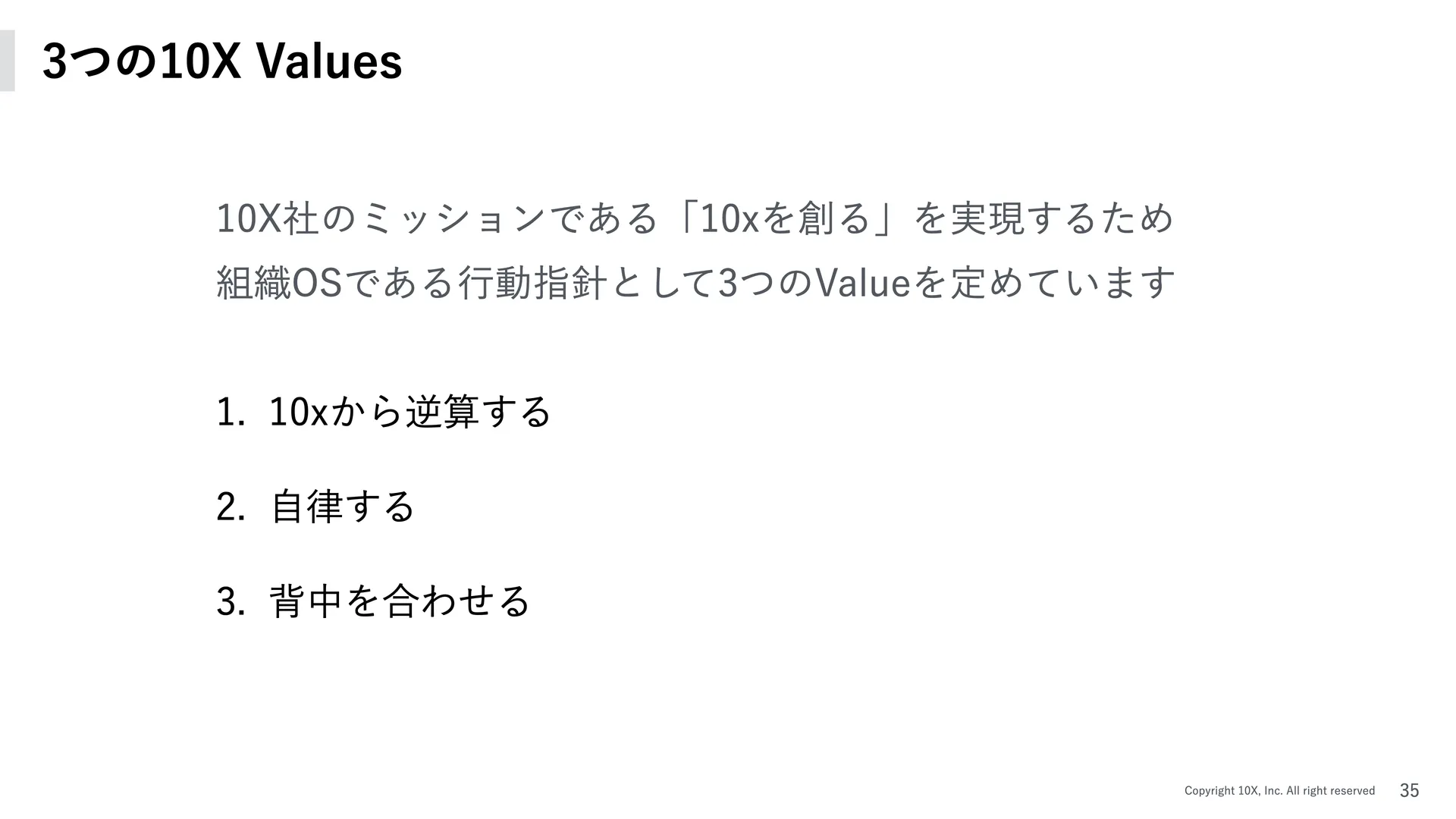
"Work back from 10x" means not being satisfied with incremental improvement — asking what would produce non-linear, positive change, and reasoning backward from the future. This starts from "noticing a truth only you can see that most people don't believe." It requires repeated experimentation and correct learning from results.
"Be autonomous" and "back to back" are paired. Autonomy means knowing what you should be doing and getting it done without being told. "Back to back" means sitting next to someone with completely different expertise, respecting each other, communicating well, trusting each other with different peaks, and learning from each other. Two values that work as one.
At 16 people, "back to back" is naturally easy — you can see what everyone's doing. As we scale and that visibility decreases, we're deliberately designing for it through documentation systems, Slack guidelines, and communication standards.
Closing
In the context of COVID-19, "store digitization" — which had never gotten real attention in Japan — is now getting a huge spotlight. Even Amazon hasn't achieved "daily grocery shopping shifting to EC." We're starting to see the world tipping toward that future.
COVID accelerated it further. The necessity of contactless daily life is being reconsidered everywhere. Stailer is in a position where society needs it, we have answers, and we have a vision.
Encountering this kind of moment is rare, even for a founder. I believe this is a once-in-a-hundred-years business. We're swinging for the fences — and we're looking hard for the teammates to do it with.
We're hiring for 10 open positions