Today, we published an update to the People & Organization section of the 10X Culture Deck — part of the organizational evolution we've been working toward since October 2022.
This post is my attempt to share the thinking behind these organizational updates.
How I've Been Spending My Time Lately
Out of the blue: I review how I spend my time every month. In September 2022 (19 working days), I apparently had 111 meetings related to people and HR. That's an average of about 6 per day — roughly 3–4 hours. And not just September — for about the past six months, it's been like this every month.
A Comment That Stopped Me Cold
In the middle of bouncing between internal meetings and external conversations, one casual chat with a job candidate stuck with me:
"I always thought of you as someone passionate about products and business development, and then suddenly you started only tweeting about organization. Why the sudden focus on organization? What's behind it? And why is the CEO doing this himself?"
I've heard variations of this from people I talk to every day. Looking back, it seems natural to me now — products, business development, and organization are all equally important issues for growing the business — but getting there required a real shift in where I put my energy. There was a specific trigger.
The "Business Problem" 10X Hit
Exactly one year ago, in September 2021, Stailer experienced a serious incident. It involved customer payments — the kind of thing that should never happen in a business built on customer trust with retail partners.
When it came to light, my level of alertness escalated immediately. I put myself and the rest of the company's resources into recovery. I owned the project directly: on one side, investigating root causes and defining response plans; on the other, explaining and negotiating with other partner companies that were impacted by the resource diversion.
The recovery effort was truly a whole-company push, and the team's hard work was what saved us. Looking at it over the long term, it was a turning point that set 10X on the right path — but in the short term, it caused a significant delay in planned revenue, and at the time it was a serious enough situation to threaten the company's continuity.
Through the full-company focus on recovery (completed April 2022) and investment in root-cause solutions, we've since built a far more stable security and quality foundation than we had then. We're in a much better place now.
"The Business Problem Is the Organization"
When I did a thorough issue analysis of the incident and traced its root cause, everything led back to one thing: management's — or more precisely, my own — dangerously casual attitude toward "quality." That attitude had the following downstream effects across the company:
-
We hadn't built the organization and operations to handle SoR (System of Record) requirements. As a result, our implicit prioritization with partners had defaulted to D (delivery) > C (cost), Q (quality). [See reference on SoR vs. SoE]
-
Large amounts of informal dual-role work. There were team members who had been proactively trying to address quality issues on their own time — but because it fell outside their formal job description, it was neither evaluated nor praised.
What 10X and I needed at that point was: to define the quality we were committed to protecting for the ongoing business, to make the decision to invest in quality while simultaneously growing the business, and to change every process and mechanism to make that possible.
In other words: the business problem was management, and it was the organization.
What I Started Working On
Two major issues, integrated into a single organizational transition project:
- [Org Design] Create an organizational structure that can protect business quality and generate growth
- [HR Design] Create an HR system where individual performance is maximized and aligned with the organization
Org Design — Introducing a Matrix Organization
Org design is the mechanism through which people, as assets, move.
Right after the incident, I began exploring how to establish a dedicated team inside the Engineering Division focused on SoR — on quality and security. By the end of 2021, we had it formalized as a team.
But startup management always means finding maximum growth within strong resource constraints. To do that, we needed to reexamine the fundamental nature of the Stailer business and reflect it in the organization.
We now summarize that fundamental nature in two points:
- Being fully committed to the success of each individual partner
- Maximizing asset value (high quality and scalability in balance → which later evolved into the platform concept)
These two can sometimes be in tension. But the organizational goal was to create a structure where that tension leads to healthy checks and productive debate. That's the org design.
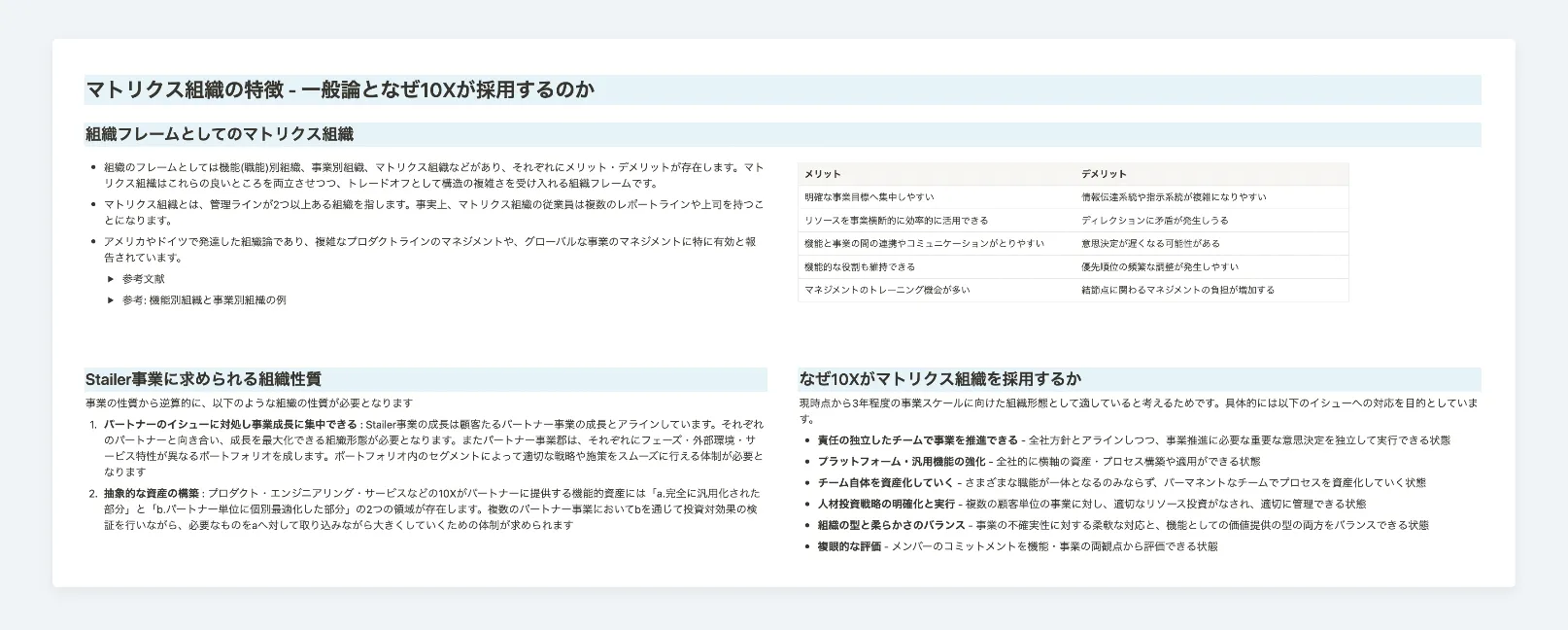
After spending significant time studying organizational models, we formally adopted the matrix organization structure. Internally, I wrote a document called "Design of the Matrix Organization" laying out my full thinking and detailed design, and we used it to drive the reorganization.
(The flavor of the content is captured in the three images below. Clickable to enlarge.)
Full rollout is starting now. We're looking forward to seeing how 10X's version of the matrix organization generates both quality and growth.
Note: There aren't many resources on matrix organizations in Japanese, so I reached out to Fukushima-san, COO of Raksul, who generously answered very detailed questions. The impressive part is Fukushima-san, not me.
HR Design — Redefining and Rebuilding the HR System
If org design is about the "container," HR design is about defining how the company engages with the "people" inside it.
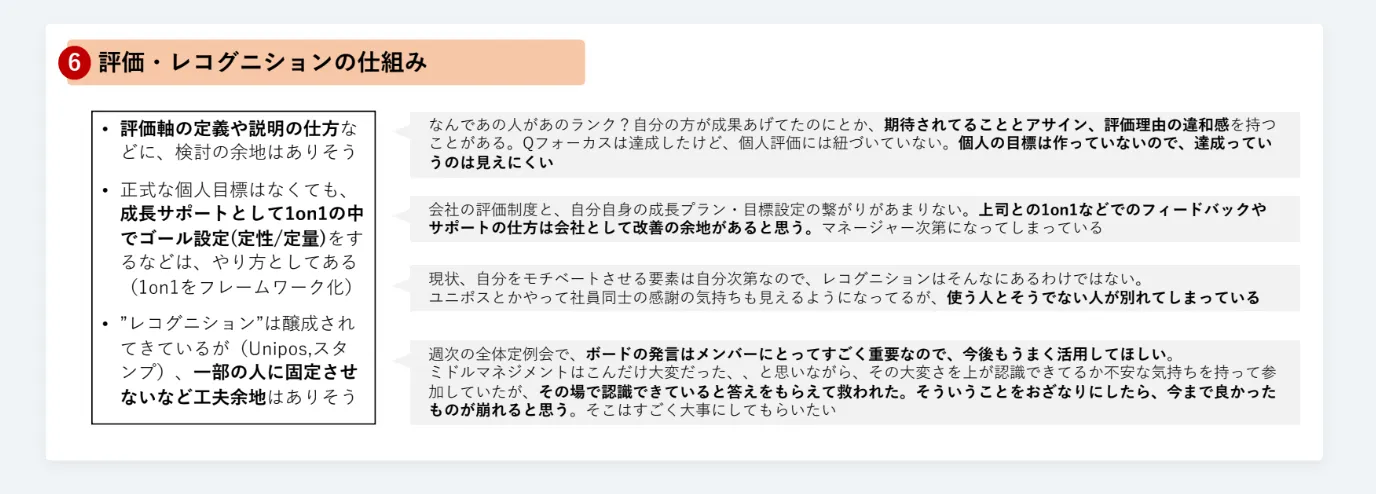
Since 2020, 10X had a five-tier evaluation system — simple, grounded in how well each person embodied our core Values. It worked fine at ten people, but by late 2021 when the team became more diverse, it was visibly failing. The document from that time captures the problems and the direction needed:
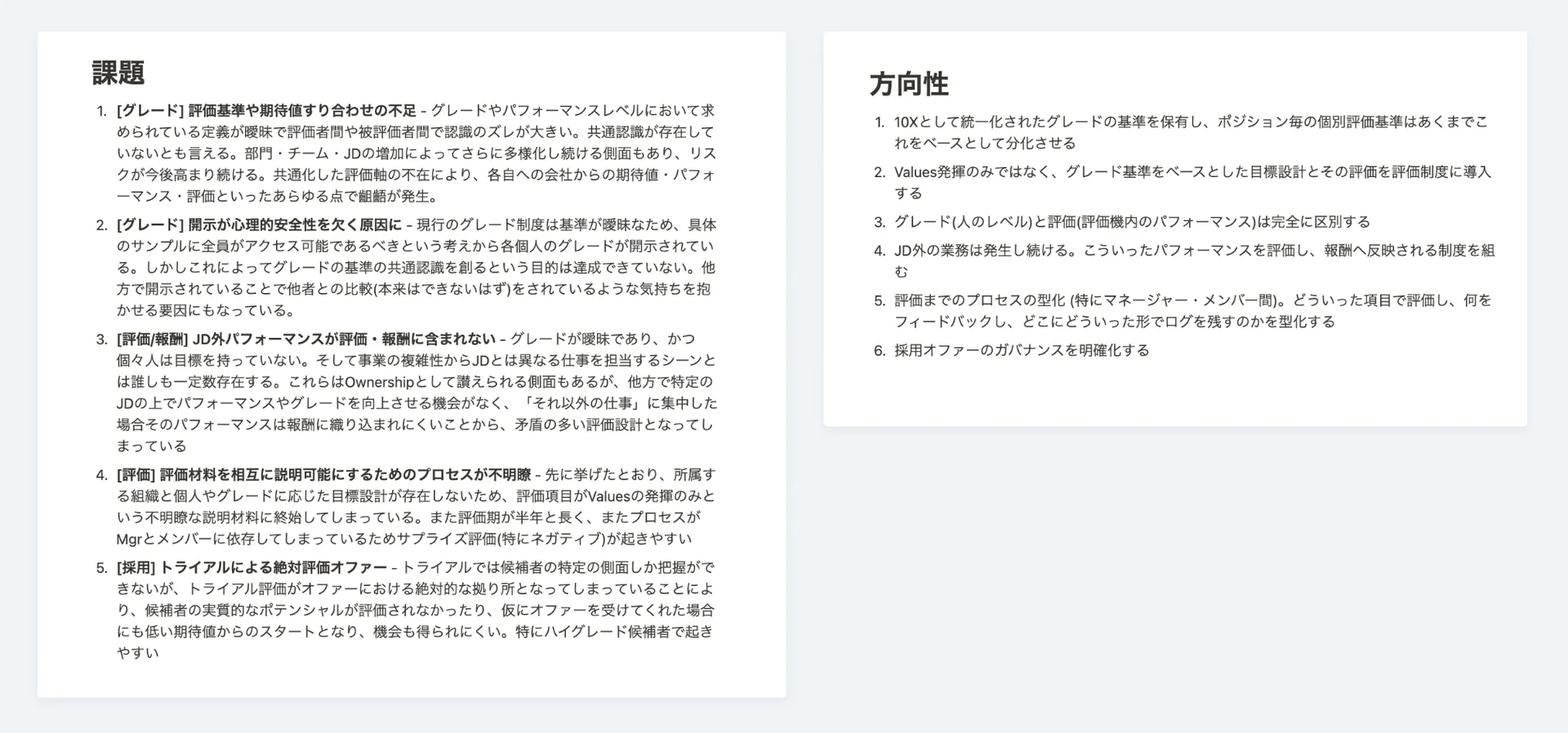
We had identified issues and a direction. But an HR system touches everyone's compensation and sense of purpose, so there was real tension: "we can't afford to get this wrong again."
That's when I reached out to Miyata-san at Nstock, who introduced us to Kaneda-san — an HR consultant who has supported SmartHR's HR system from v1 to today. Meeting Kaneda-san was the second major catalyst for me taking HR seriously.
Kaneda-san's blog reveals the depth of his frameworks. (His interest in cabin-building caught my attention too.)
His broad experience — across high-growth and mature companies alike — gave us a rich "template" to work from. We layered on top of that 10X's Values and the essence of our matrix organization, and built our HR system from there.
(Kaneda-san's ability to predict "problems that will arise in practice" during the design phase — in granular detail — left the whole team in awe.)
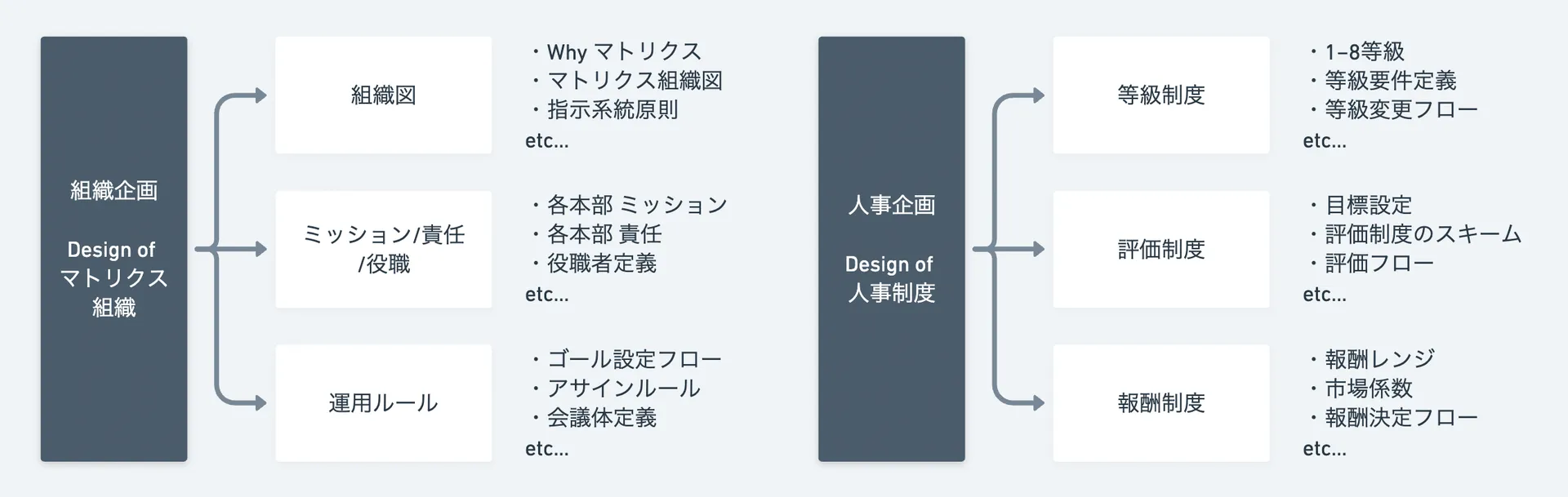
The final design decomposed the old evaluation system into three distinct frameworks with clear relationships among them:
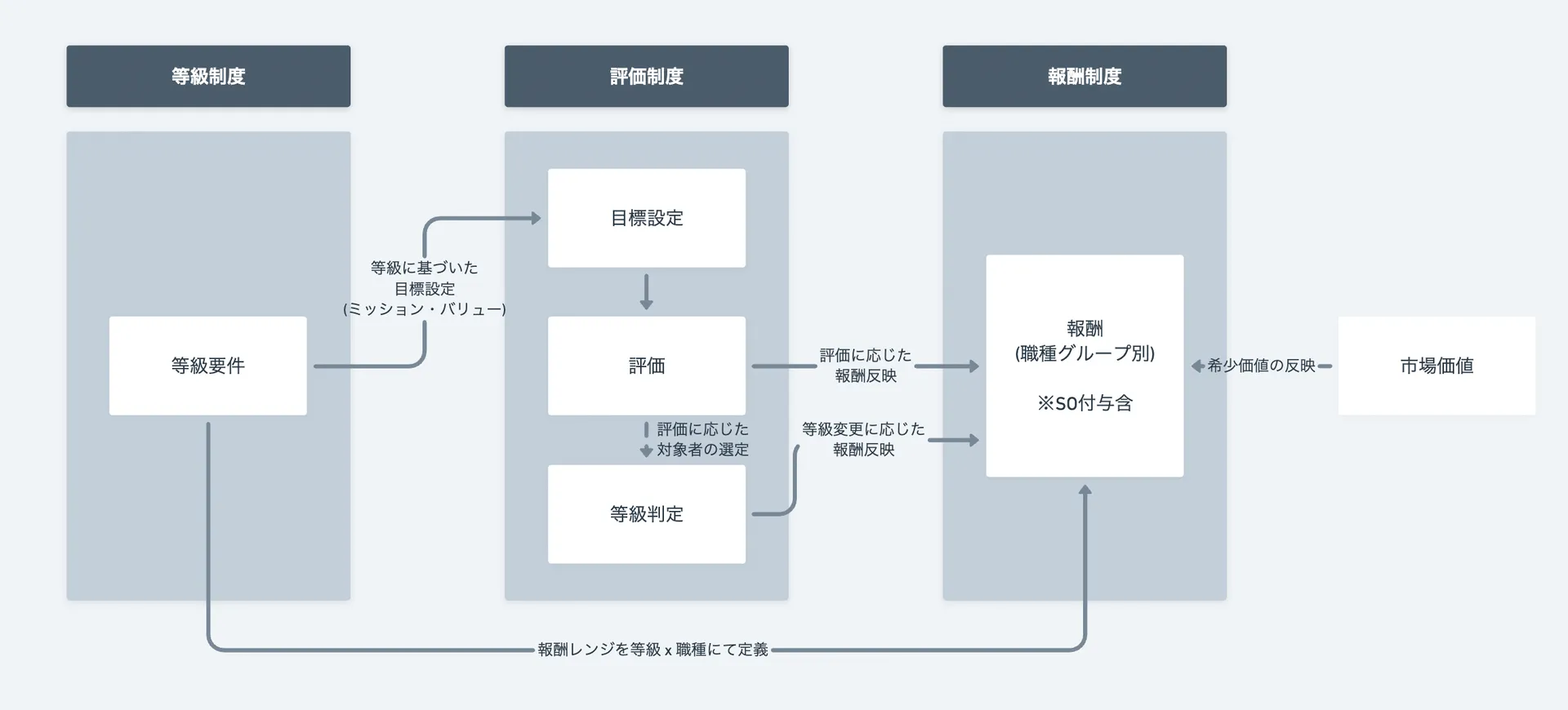
We produced three Design Docs covering the grading system, evaluation system, and compensation system — and updated our offer framework for hiring as well:
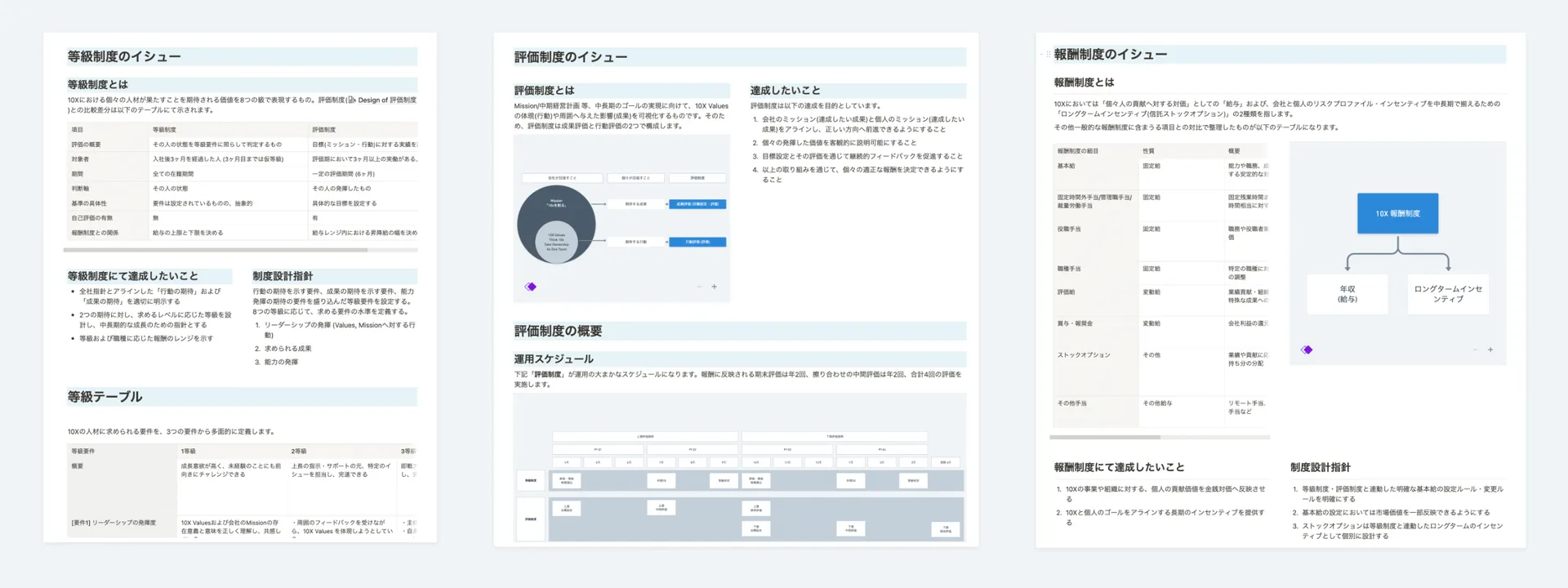
Today is the first day under the new system, following the transition from the old one.
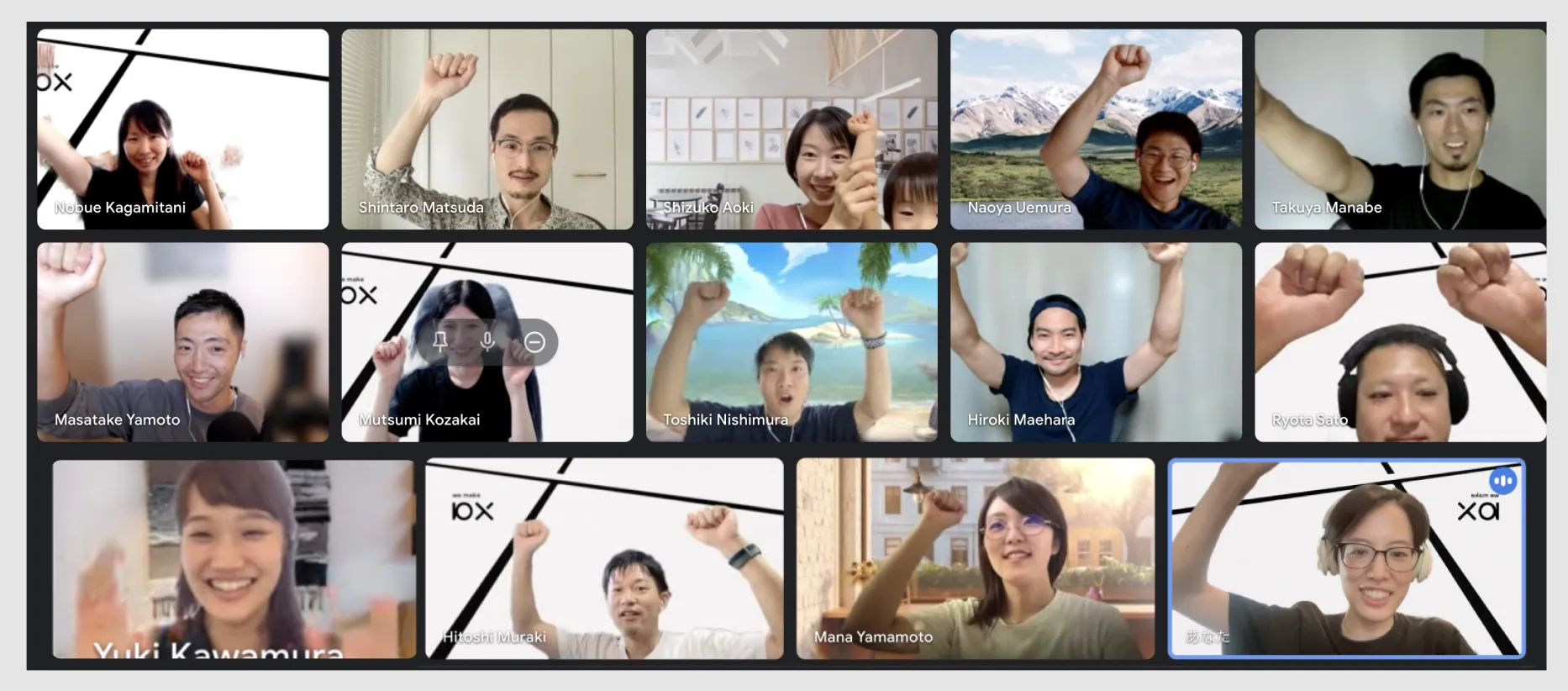
The precise preparation work leading up to this transition is something I want to brag about openly. The corporate team worked incredibly hard. Thank you, all of you. I'm proud to work with you.
My Takeaway
10X has three Values: Think 10x, Take Ownership, As One Team. They've been at the core of what we stand for since day one. Both the org design and the HR design in this post were ultimately about maximizing the expression of these Values across 10X for roughly the next two years.
In the early days when the founding team was small and similar to each other, "embodying the Values" might have meant: "in a state of constant shortage, expand your own possibilities, identify the necessary work, and push forward through uncertainty."
But as the company has grown, as the team has become more diverse, as more people have joined — I think the moment came to update that interpretation.
Without organizational clarity, new members will be confused about what to do. They might step on each other's work or constantly bump heads. Without proper levels and goals, it's hard to know how to translate abstract Values into action — or to stay aware of what the company as a whole needs.
To express the 10X Values, each person's opportunity and expectation needed to be made explicit.
When opportunity and expectation are clear, that's when people can think about how to exceed them (Think 10x), move boldly (Take Ownership), and work toward team outcomes (As One Team). The responses from others create a feedback loop. That's how individual expression of Values grows. And that's how it comes back as business value.
"Value is the output of the business; the business is the output of the organization" — that's my takeaway from all of this. And the organization is never finished.
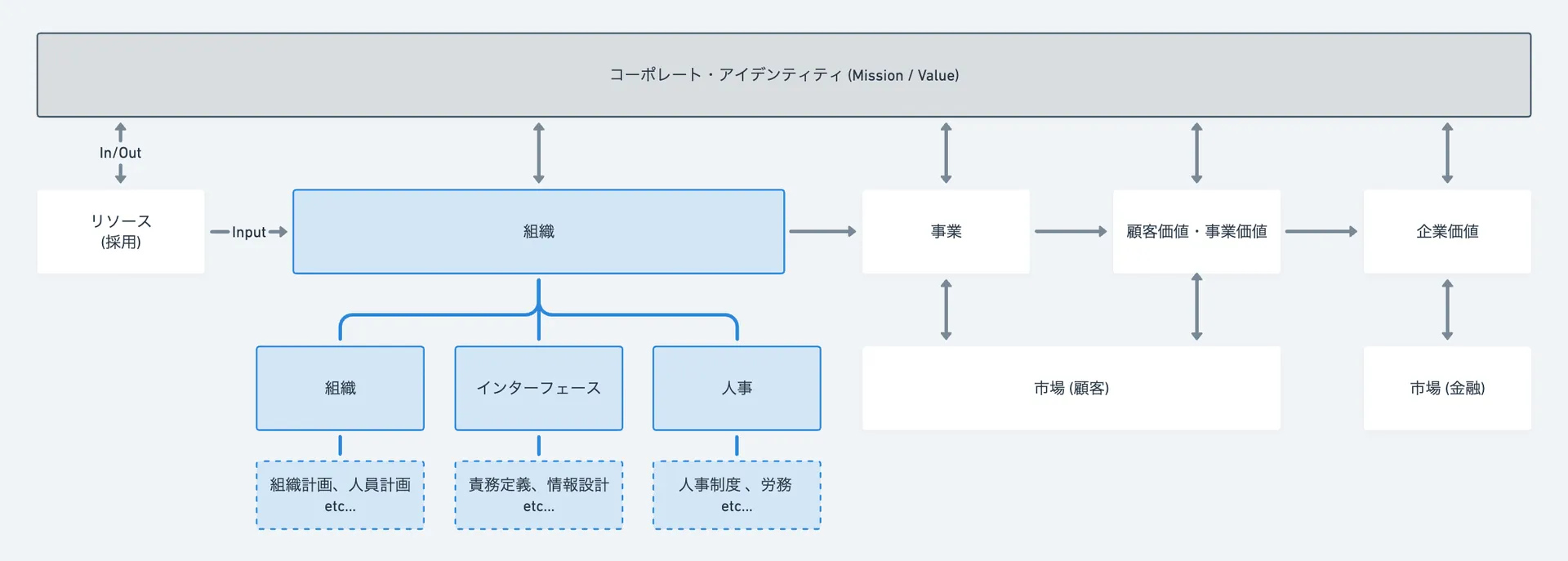
Through this organizational update, I believe we've laid the foundation for everyone currently at 10X — and the many people we'll welcome in the future — to fully express the Values and do their best work. I can't wait to see what 10X does next.
10X Careers